

Tintin in Tibet
Tintin in Tibet
Couldn't load pickup availability
Author Hergé
Artist Hergé
Format Hardcover
Number of pages 64
Age 7-10 years, 11-14 years
ISBN 978-5-00041-557-3
Series The Adventures of Tintin
Translated by Mikhail Khachaturov
Publisher: Melik-Pashaev
Dimensions 290 × 217 × 10 mm
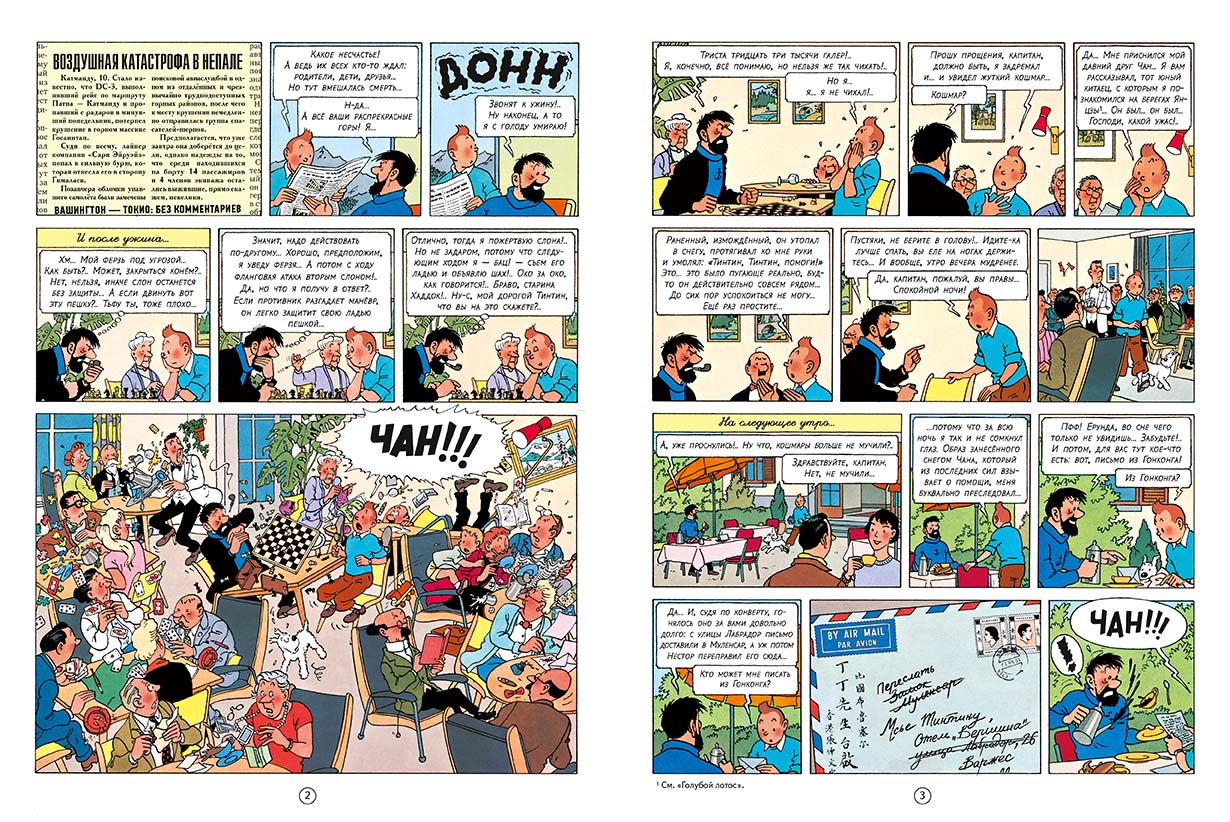
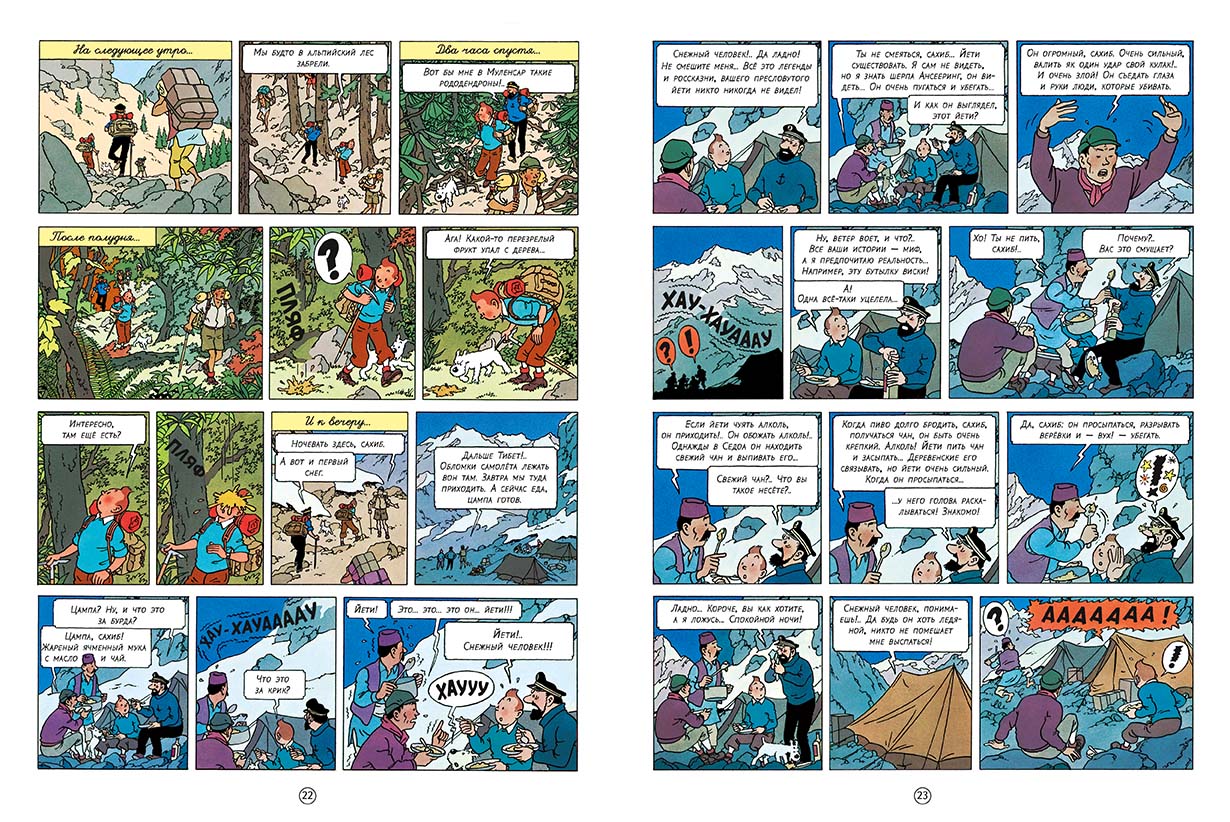
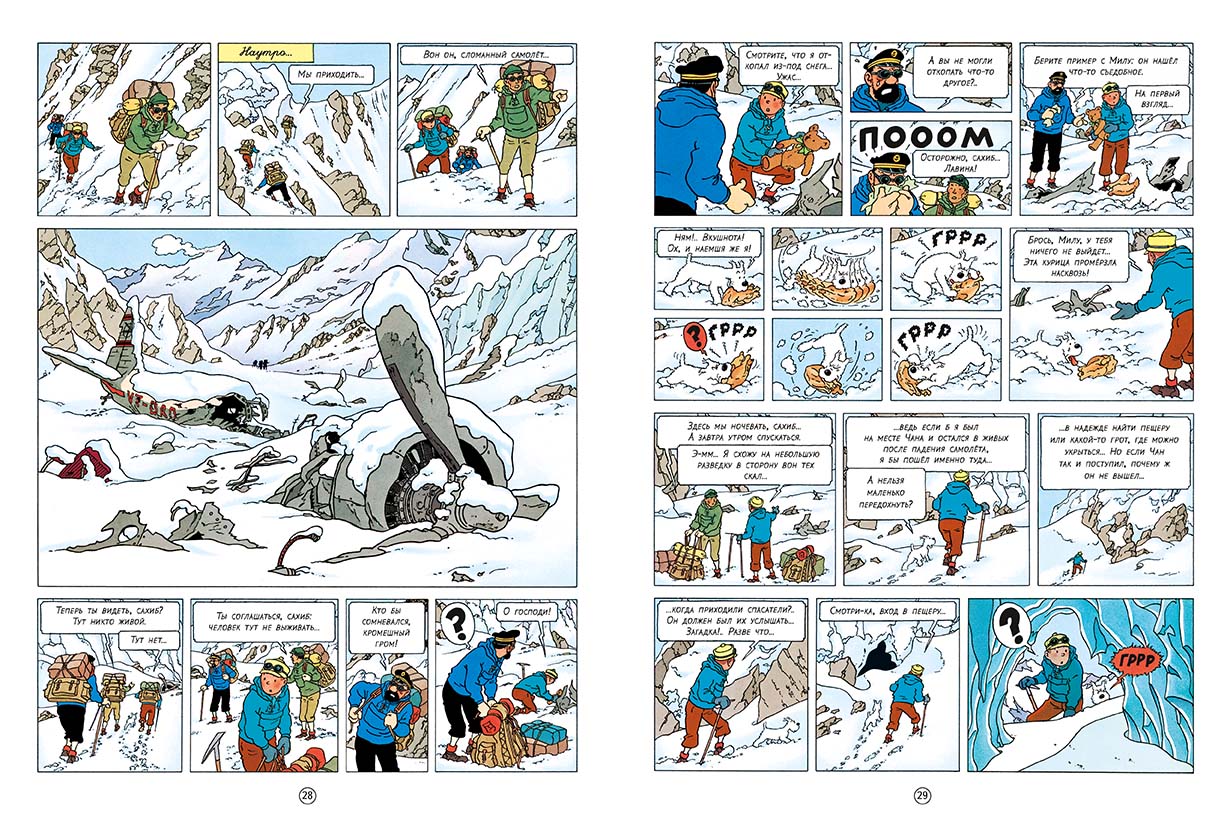
While resting in the mountains, Tintin receives a letter from his Chinese friend Chan, who writes that he will soon fly to London and they will finally be able to see each other after a long separation. Chan's journey to Europe takes him through Kathmandu, where the young Chinese man plans to visit his adoptive father's cousin. However, the joyful news is followed by tragic news: Chan's plane crashed in the Himalayas. According to newspaper reports, there were no survivors of the plane crash, but, contrary to common sense, Tintin is convinced that his friend is alive – after all, he dreamed of him last night! Drowning in the snow, the exhausted Chan reached out his hands to Tintin and begged for help. Tintin decides to fly urgently to Kathmandu, to go from there up to the crash site. Of course, Captain Haddock cannot let him go alone…
The publication of the anniversary, 20th volume of "The Adventures of Tintin" in a magazine began in September 1958 and ended in November 1959 (the album version was released in 1960).
The work on another story coincided for the author with a difficult period in his personal life, which cost him deep depression. Hergé was on the verge of a long-overdue, but extremely painful decision to divorce. For him, an extremely conservative person, who above all valued reliability and constancy in relationships, the need to make such a decision looked like a complete catastrophe. Creativity became a haven of safety for Hergé once again: it was no wonder, for he had long ago realized that Tintin was his best psychotherapist.
The original idea for the 20th album came to the author back in the late stages of working on the previous volume ("Red Sea Sharks", 1958): a criminal plot would form the basis, with Nestor, the long-time butler of Marlinspike Castle, as the main character. However, the more Hergé thought about him, the less he liked him. At the same time, a completely different idea came to his mind, which he described in a few words: "Tibetan wisdom – lamas – yeti" (the note has been preserved in the archives – as has the mention that twenty years before this, Hergé had already considered the idea of a "Tibetan" adventure). That seemed to the author to be quite fruitful. All that remained was to find a compelling reason to send his heroes to Tibet. Turnesol was the first to come to the rescue: indeed, why wouldn't the restless professor want to find a yeti and, in doing so, reveal another scientific secret? For this, he could quite well go to Tibet – and his friends would follow him, of course. However, almost immediately Hergé dismissed this idea as completely untenable: Turnesol was too material, too "mathematical" a person to become the main driving force of a story that the author saw not as an ordinary adventure, but rather as a kind of spiritual quest, an initiation. And that was when Hergé remembered Chan, the character from "The Blue Lotus"! The seed of the idea sprouted, the rest was just a matter of technique: painstaking preparatory work began.
The main sources of inspiration for Hergé were the works of Alexandra David-Néel (1868–1969), a French opera singer and tireless researcher of Tibet; the accounts of the first Europeans to conquer the Himalayan peaks – Edmund Hillary (Mount Everest) and Maurice Herzog (Annapurna), as well as the works of Bernard Huppert (1916–2001), one of the pillars (and actual creator) of cryptozoology. Hergé considered it necessary to meet Herzog and Huppert in person, and these acquaintances only strengthened the author's belief in the correctness of the chosen plot. By the way, both of them had no doubt about the existence of the yeti: Herzog claimed to have seen footprints in the snow that could not belong to any known living creature.
"Tintin in Tibet" stands apart in Hergé's work. Almost all Tintinologists consider this album to be the best. It was this one that finally cemented Hergé's status as one of the most significant authors of the 20th century, a testament to which can be considered the never-ending stream of articles, studies, dissertations, philosophical treatises, parodies, and lampoons (how could you forget them!), dedicated to the most diverse aspects of the series, even now, 40 years after the death of Georges Remi. "Tintin in Tibet" is an absolutely intimate, gentle album. It is funny to say that, in essence, there is no conflict in it; moreover – not a single negative character! The number of characters here is reduced to a minimum. At the center of the narrative are three – Tintin, the Captain, and Milou. For the first time in many years, we do not see the Duponts on the pages. Turnesol's appearances can be counted on one hand. There are also almost no references to previous albums and familiar characters that Hergé so loved (except for the all-pervasive voice of Bianca Castafiore, who still broadcasts her eternal "Jewels of the Matinée" to the surrounding area). Nothing – only the blinding whiteness of the endless snows of Tibet, in which the researchers (given the radical changes in the author's personal life) see an allegory of a "blank slate", a new beginning. In other words, "Tintin in Tibet" is an initiation album, an album of immersion (primarily in oneself). Did the same Captain Haddock know, for example, that "in him lives a faith capable of moving mountains"?
Read also:
The Blue Lotus
The Pharaoh's Cigar
The Sun Temple
7 Crystal Balls