

Temple of the Sun
Temple of the Sun
Couldn't load pickup availability
Author Hergé
Artist Hergé
Type Hardcover
Number of pages 64
Age 7-10 years, 11-14 years
ISBN 978-5-00041-518-4
Series The Adventures of Tintin
Translated by Mikhail Khachaturov
Publisher: Melik-Pashaev
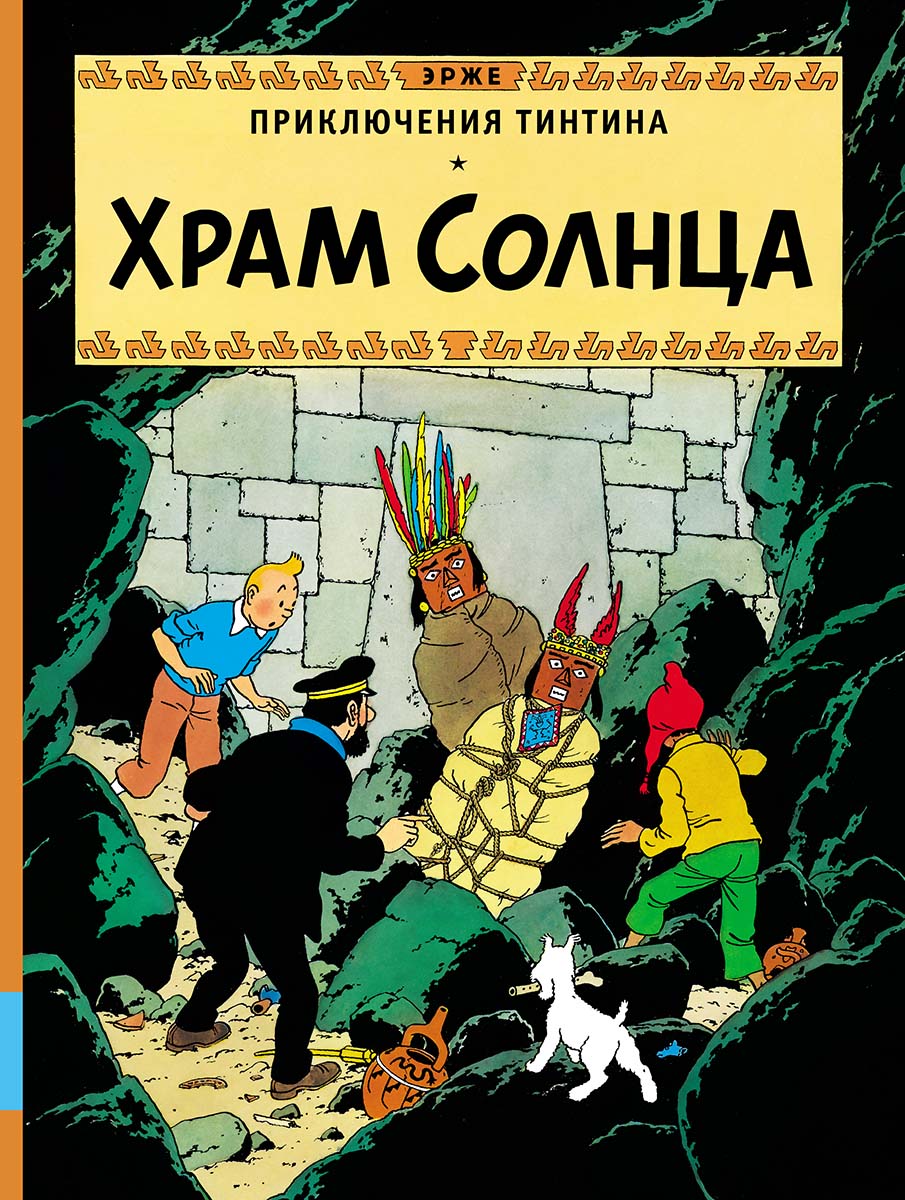
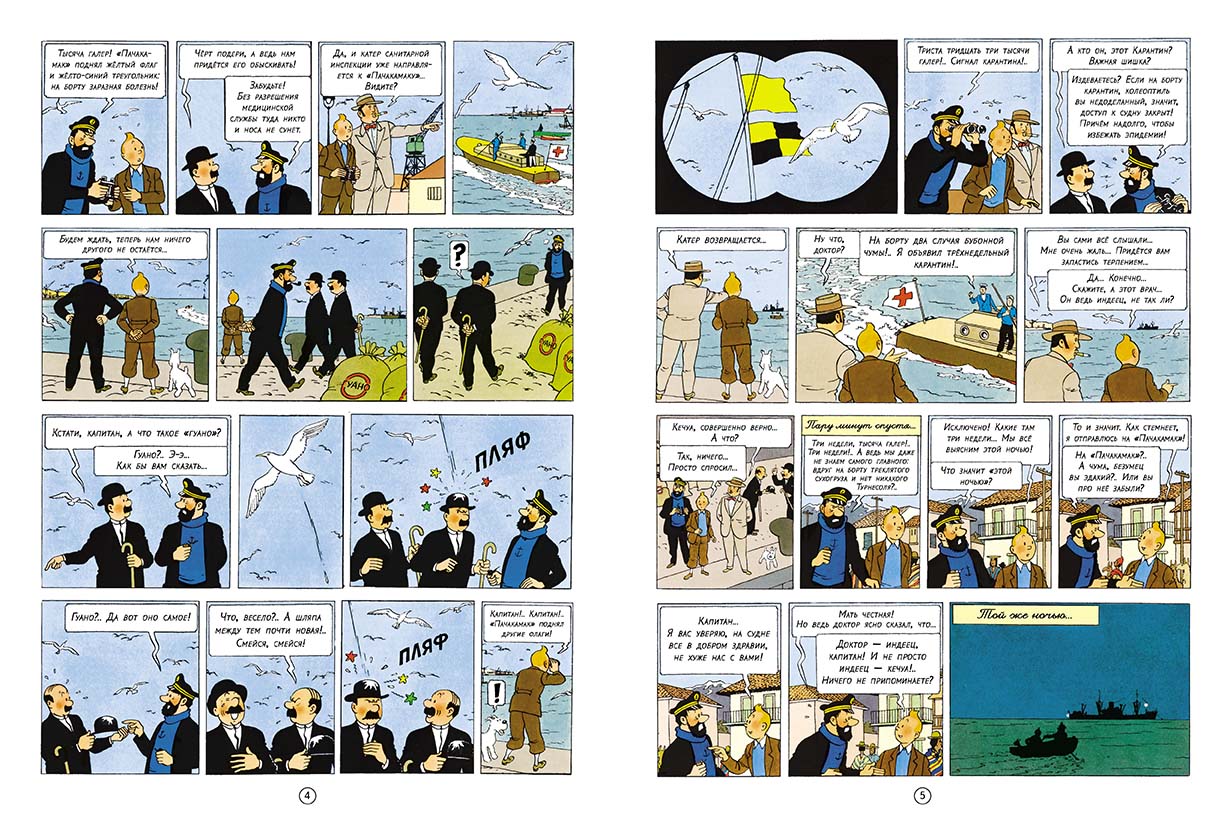
Tintin and Captain Haddock arrive in Peru. They believe that Professor Calculus is aboard the cargo ship Pachacamac. However, upon arrival at the port, the vessel is immediately placed under quarantine. Despite the captain's warnings, Tintin sneaks onto the ship and finds the professor there, fast asleep. Tintin himself narrowly avoids capture, but jumps overboard just in time. He sees the Indians transfer Calculus to shore and take him by train deep into the country. Our friends realize that their only chance of saving the professor is to follow the kidnappers. The problem is that they need a guide, and the local people are unwilling to speak with foreigners. Fortunately, Tintin soon meets an Indian boy named Zorrino, who agrees to lead them to the Temple of the Sun.
“The Adventures of Tintin” is a world-famous series of comic books by the Belgian artist Georges Remi (1907–1983), who worked under the pseudonym Hergé. Risking his life, the intrepid reporter Tintin investigates mysterious incidents, but emerges victorious from every predicament. And whatever happens, his faithful friend is always by his side—the snow-white fox terrier Snowy.
The diptych format, tried out with the “pirate” story (“The Secret of the Unicorn” and “Red Rackham’s Treasure”), proved so successful that Hergé also decided to make Tintin’s next “Indian” adventure a two-volume work. The sequel to “The Seven Crystal Balls” was first published in magazine format (the weekly Tintin, 1946–1947), from which Hergé removed more than 300 panels for the 1949 standalone book edition, believing they merely weighed down the narrative. In addition, the magazine version used the so-called Italian format, which was wider than it was tall, greatly altering the approach to panel layout. However, several years ago, the magazine version (in a deluxe edition, on “vintage” paper) was also released as a standalone album. It is believed that one of Hergé’s main sources of inspiration for “The Temple of the Sun” was Gaston Leroux’s (1868–1927) adventure novel “The Bride of the Sun” (L’Épouse du soleil, 1912).