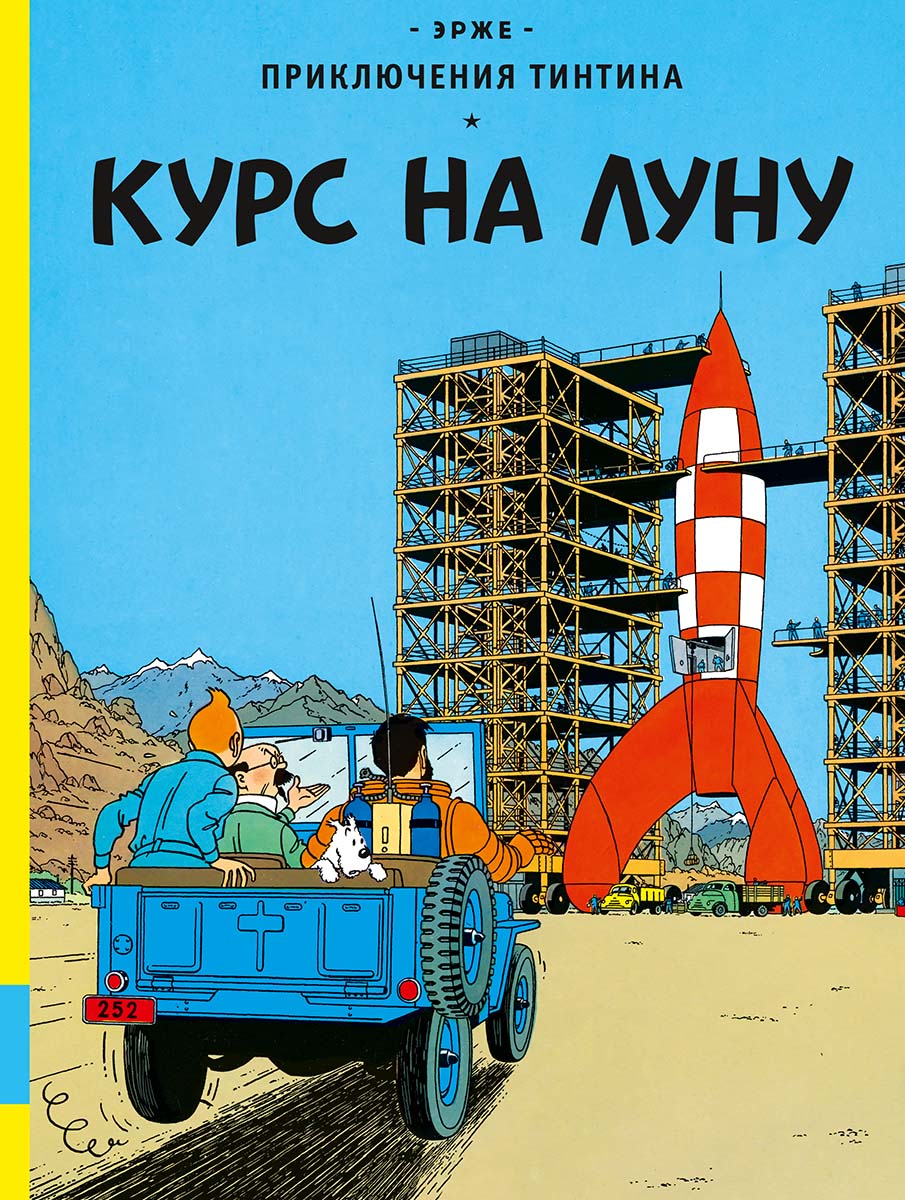


Course for the Moon
Course for the Moon
Couldn't load pickup availability
Author Hergé
Artist Hergé
Format Hardcover
Number of pages 64
Age 7-10 years, 11-14 years
ISBN 978-5-00041-541-2
Series The Adventures of Tintin
Translated by Mikhail Khachaturov
Publisher: Melik-Pashaev
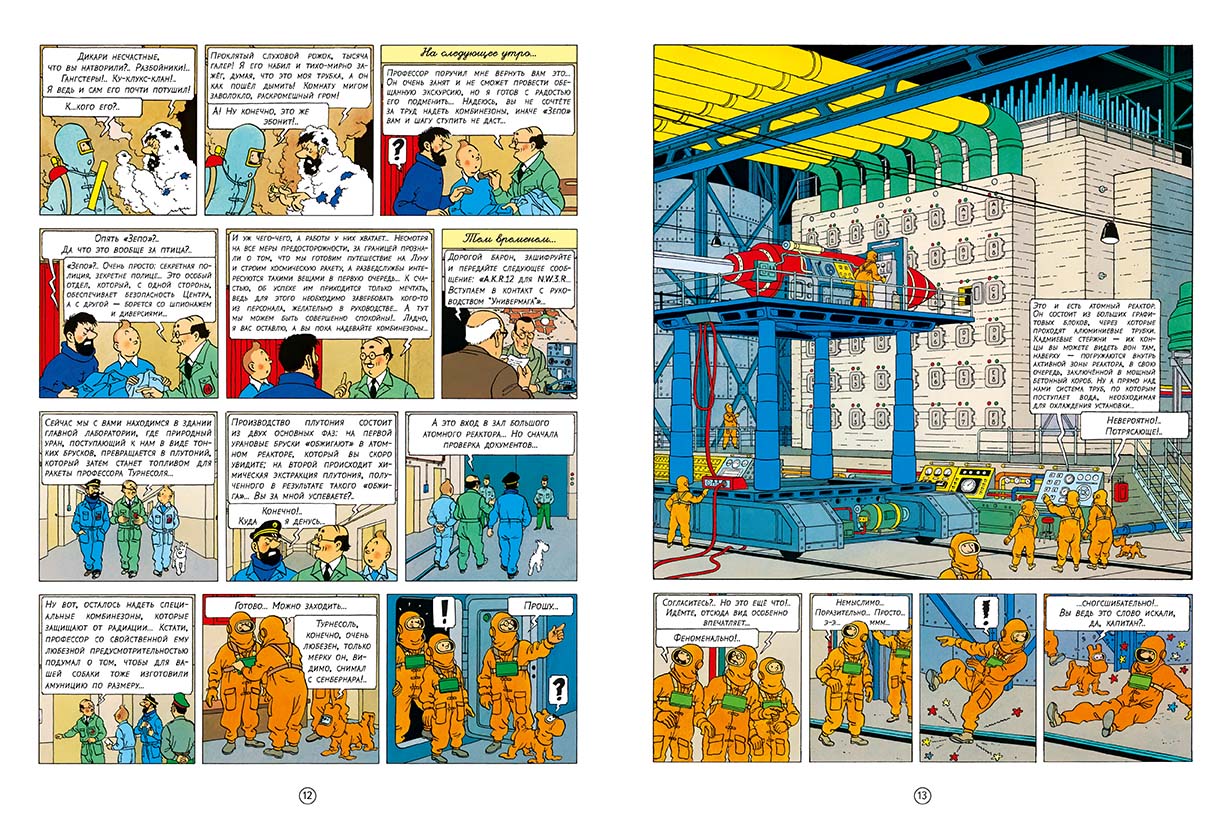
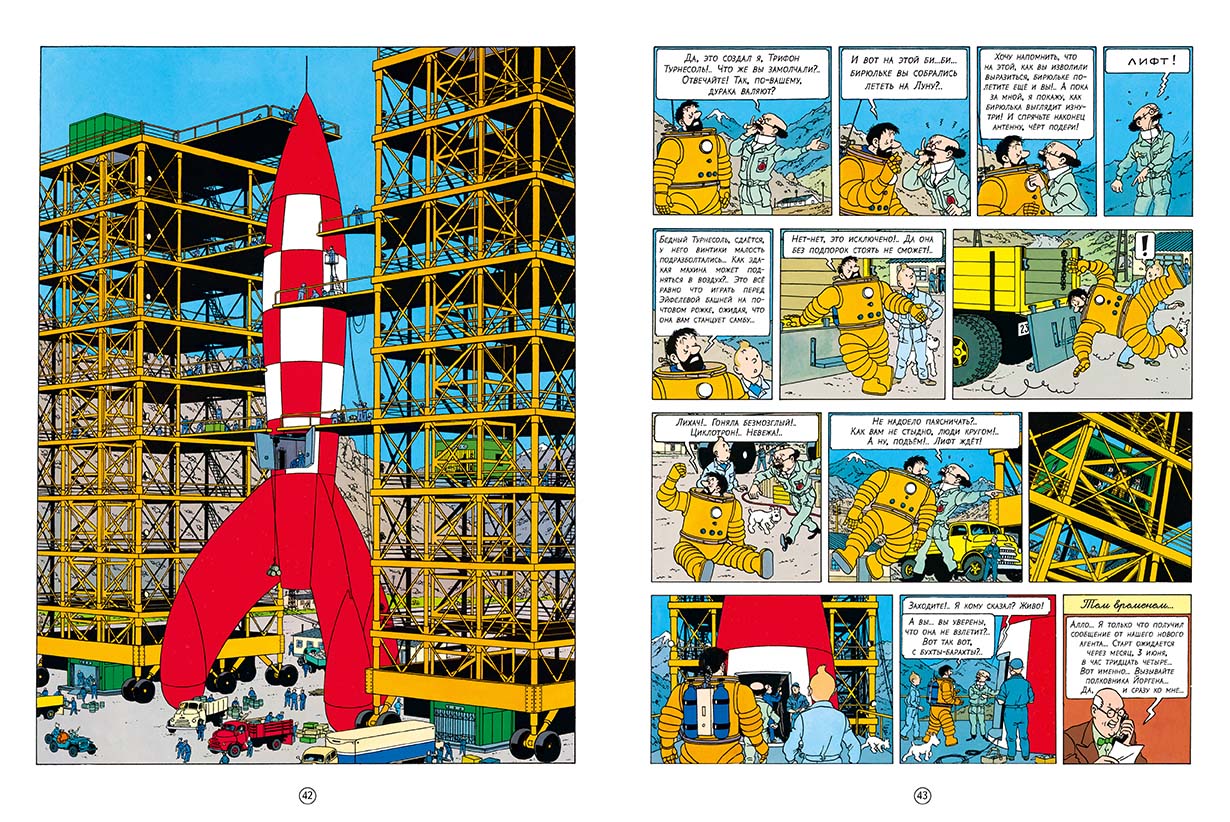
At the invitation of Professor Tournesol, Tintin and Captain Haddock fly to Syldavia and, straight from the airport, end up at the Atomic Research Centre, hidden in the Skurapat Mountains. There, to their astonishment, they learn that Professor Tournesol is working on creating an atomic engine for the first manned spaceflight in human history. But the most stunning news is yet to come: it turns out the professor intends to go to the Moon himself! What's more, he asks Tintin and Captain Haddock to accompany him on this journey. The friends begin preparing for the flight, but things do not go smoothly. Then, a leak of secret data occurs, and it becomes clear that despite the strictest security measures, a traitor is operating within the Centre!
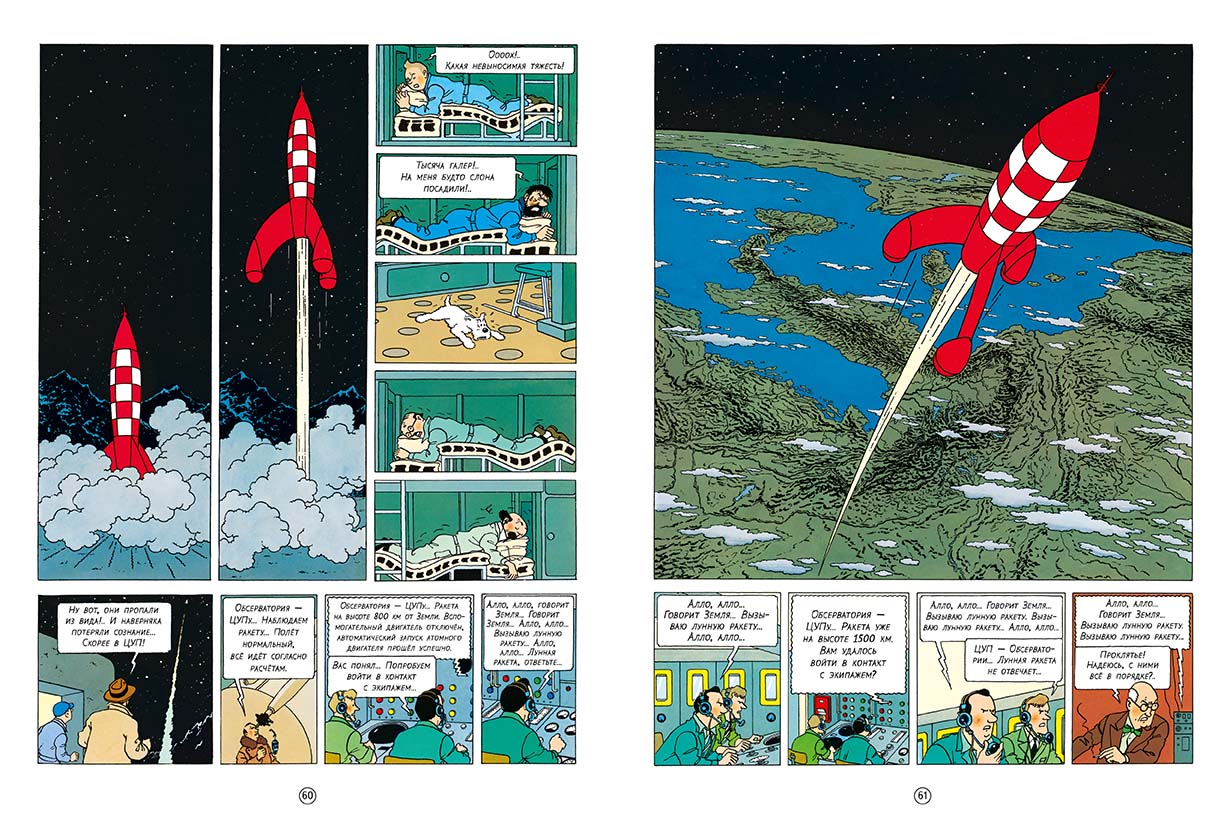
The theme of space had long fascinated Hergé, who always had a keen interest in science. After two consecutive successful diologies, "The Pirates" and "The Inca", the artist did not want to change such a successful format, both creatively and commercially, especially since his latest idea turned out to be too ambitious for a single volume. On the other hand, Hergé knew full well that it was unthinkable to begin bringing it to life without thorough preparation, so no other story had required the author to immerse himself so deeply in the subject. The scientific side of the lunar journey had to appear as realistic as possible on the pages of the album, but at the same time not become a drag for the reader, hindering them from following the development of the plot, because it was Hergé's readability that he valued above all else, ruthlessly cutting out anything superfluous. Besides, "The Adventures of Tintin" are, first and foremost, adventures, and humorous ones at that! This means they should not only teach, but also entertain, delight, amuse, and astonish... Hence the author's desire to compensate for the technical complexity of some of the dialogues with strikingly simple visual solutions. Take, for example, the lunar rocket, whose shape and (especially!) colour scheme make it look more like a toy than a spacecraft! However, even here, the future revealed Hergé's remarkable foresight: very soon this rocket would become not only the most recognisable visual image of the series and a hugely popular souvenir, but also one of the main symbols of the ninth art as a whole. Let's also mention another important point. How many spacecraft can we remember that any child could draw in just a couple of minutes? Perhaps a bit crookedly, perhaps roughly (say, confusing the number of red-and-white squares on the hull), but recognisable!
Preparatory work on the lunar adventure of Tintin and his friends began as early as the mid-1940s, but the first publication in Tintin magazine did not appear until March 1950. The album "Destination Moon" was published in 1953. In total, working on the diology took Hergé more than four years and cost him a deep depression and nervous and physical exhaustion. The realities of the time no longer left comic book authors any room for even the slightest approximation: everything had to look as plausible as possible. Carrying out such a task alone was absolutely impossible, so from the very beginning Hergé surrounded himself with assistants—both for the scientific and scriptwriting aspects, and for the artistic ones, which we will discuss in a little more detail. Edgar P. Jacobs, who had made a huge contribution to the visual appeal of several previous albums, gradually switched to his own series, "The Adventures of Blake and Mortimer", which almost immediately became a bestseller, and as a result, his work with Hergé soon came to an end. However, the author of Tintin was once again very lucky: Jacobs was replaced by another young and incredibly talented Belgian artist (and future classic), Bob de Moor (1925–1992), who would remain a loyal companion to the master until the very end. Let's also mention the involvement (primarily in scriptwriting) of another famous Belgian comic artist, Albert Uderkoen (1922–2011). Thus, during the process of working on the lunar diology, the "Hergé Studio" was formed, which was officially registered on April 6, 1950, a week after the publication of the first part of the two-volume work.
Also read:
First Steps on the Moon
The Secret of the Unicorn
The Treasure of Red Rackham
The Black Island